Introduction
From an early point in my career as a strategic analyst, I have found value in system dynamics as a methodology and mental construct. The approach explains phenomena by examining webs of interdependent causal relationships. It facilitates understanding how systems behave in machinery, commerce, politics, and military affairs through “feedback loops” produced by chains of causal relationships, which can have stabilizing or destabilizing effects.
My analysis of troubling global dynamics and technology trends has led me back to system dynamics for insights. When I look at what is unfolding today, from artificial intelligence (AI) and the Persian Gulf War to U.S. politics, examining the interdependent causal relationships shaping and connecting those developments suggests cause for strategic concern: The interrelationships among technology, politics, and military affairs are producing increasingly destabilizing effects. At the same time, mechanisms in the global system that have historically countered such destabilization are becoming weaker. In system dynamics terms, these interacting developments are producing increasingly worrisome outcomes while weakening our ability to manage them.
At the forefront of such risks are the interactions among rapidly developing artificial intelligence, economic and political transformation, and strategic competition between the U.S. and China.
The Question of Destabilization from Artificial Intelligence
The key strategic question posed by artificial intelligence is whether AI’s promised benefits in productivity, well-being, military capabilities, and government control will emerge and spread quickly and widely enough to offset the negative effects of massive economic displacement, political destabilization, and the increased capacity of people, groups, and governments to harm one another.
The potential benefits of AI—and of the human and other systems it could empower—are enormous. In the short term, AI is increasing productivity and accelerating analysis and action across programming, research, legal services, administrative work, and other activities. It enables the hypervelocity analysis of vast quantities of data, making possible everything from rapidly identifying potential treatments and developing cures for diseases through bioengineering to accelerating scientific discovery and engineering work, managing complex businesses and government bureaucracies more effectively, and identifying terrorist activities and financing. AI not only makes individuals vastly more productive but also extends the reach of their intelligence and accelerates their analysis, enabling them to do things previously beyond the limits of their available time and expertise in numerous different domains, from creating art and media content to accessing and searching material in a myriad of languages, planning vacations, and starting and building a business.
Despite AI’s vast promise, its expanding capability and application, particularly its integration into humanoid and other physical machines, will also likely eliminate jobs more rapidly than it creates them. This is likely to be true in both the skilled and unskilled domains.
The job displacement effect of AI is likely to impact young people particularly hard. Its productivity-enhancing effects already mean that firms can achieve the same results with fewer entry-level employees, particularly in areas like programming, legal services, medical and academic research, customer service, and administrative support. Most business entities will probably pursue a balance between increasing existing employees’ productivity and gradually reducing new hiring. Among older, more experienced employees, competition may increasingly favor those who use AI more effectively. The net effect of these dynamics, however, is that opportunities may dry up in a range of entry-level positions, while more senior personnel fight to keep their positions.
In jobs requiring physical labor, similar job losses and competition for remaining positions may occur. Ever-cheaper AI-powered mechanical systems, whether in humanoid robots, quadrupeds, autonomous air, sea, undersea and underground vehicles, factory assembly lines, or a myriad of other forms, will make human labor cost-prohibitive in a range of areas, possibly including factories, restaurants, and domestic service work.
Beyond the economic sphere, militaries are already embracing unmanned systems and may lead the transition from human soldiers conducting dangerous battlefield operations to AI-assisted soldiers commanding units of mostly automated systems. This transition could occur even more rapidly than in parts of the private sector, not just because robots are cheaper than humans, but because sacrificing automated systems will be preferable to sacrificing humans, and in an increasing number of cases, the robots will be stronger, faster, more precise, and more capable of processing information and making decisions quickly.
In all of these areas, from skilled and unskilled work to military service, the disappearance of millions of skilled and unskilled positions will likely leave a growing pool of unemployed and disaffected youth. The phenomenon will resemble that already seen today in third world enclave economies where revenues generated by natural-resource extraction do not generate enough jobs that pay wages sufficient to sustain the population. At the same time, because the returns from AI will accrue primarily to the owners of computing infrastructure and associated machines, the AI revolution will tend to increase income inequality, fueling social tensions and political frictions among those who see the distribution as unjust.
In parallel with social and political tensions from the likely shift in wealth distribution, AI may also empower greater criminality by providing digital tools for hacking, enabling the use of robots and automated systems to commit crimes, and creating an ever more complex labyrinth of financial identities in which criminals can commit fraud, conceal transactions, and launder illicit proceeds.
AI in the hands of well-resourced state and non-state actors will also magnify opportunities for extortion and terrorism. Particularly with open-weight models and adaptations that will be available through the criminal economy and rogue states, AI will enable individuals to inflict previously unattainable levels of harm, from devastating cyberattacks on financial systems and physical infrastructure to bioengineering superviruses, designing and producing nuclear weapons, or simply launching or detonating those of another state.
Finally, rapid technological transformation may compound social strains already caused by economic hardship and insecurity. The audiovisual content AI will help create, ever more rapidly, in ever greater volumes, and ever harder to distinguish from reality, will supercharge the polarization and already undermining civic culture and democracy. Ironically, AI may also contribute, albeit in unhealthy ways, to easing such pressures by facilitating the expansion of virtual worlds to absorb the ever-growing group of unemployed youth that social philosopher Malthus once called “surplus” population. As a complement, it will facilitate the emergence of a physical world in which interaction with humanoid and other AIs is ever more common and, for some, preferable to human bonds.
In short, despite some stabilizing mechanisms which may not be healthy for traditional social interactions, the AI revolution will have strong destabilizing tendencies, threatening to create a vast, unemployed class of youth and others in societies perceived as increasingly unequal and insecure. The resulting social environment may be increasingly resentful, polarized, and psychologically and socially impaired.
The expanded sources of pressure within economic, political and social systems described in the preceding analysis will make mechanisms of control and legitimation increasingly important in determining the system’s stability. As noted before, the AI revolution is likely to create unprecedented wealth and benefits, from commercial revenue to the cure of disease. The governments or elites that can control AI and such associated benefits will face important choices about whether and how to distribute them to offset the previously noted negative consequences that the AI transformation will generate. Those choices will also include whether and how to justify the existing distribution of benefits and the authority of those who control them, as well as how to use mechanisms, including rewards, coercion, manipulation and information control, to sustain that status quo.
For governments and elites seeking to manage the social and political tensions wrought by the AI transformation and/or sustain their own privileged position, AI and the systems it supports will also provide much greater capacity to monitor populations, enforce control, and distribute rewards.
What is unclear is whether the growth and distribution of benefits and controls will expand rapidly enough to contain the instability and questions of legitimacy the AI revolution unleashes. The manner of pursuing that legitimacy and applying a combination of reward and coercion will reflect the character of the political leadership and elites in each country. Those approaches are likely to range from the benevolent to the malign and spawn a range of new ideologies and political movements relating the distribution of wealth and power to the new technological transformation.
Deterioration of Governance Capability
In a time of significant transition, leadership and governance by the most powerful states, other actors and international institutions will define not only who gains most, but how the transition plays out. As noted previously, the strategies pursued by each state in constructing and leveraging expanded governance capacity, and managing legitimation, compensation, and control will be decisive. Yet those dynamics will also define how effectively governments manage that transition and their relative performance, particularly that of the dominant powers.
The ability of the world’s governments to effectively manage the transition wrought by both AI and other phenomena has arguably been undercut by changes in U.S. policy that have reduced funding for and weakened cohesion within traditional multilateral institutions, as well as shaken up traditional alliances.
Beyond the diminished capacity of institutions and alliances, governments around the world are weakened in their response to the challenges of the AI revolution by other sources of severe economic and sometimes military stresses, including polarized populations cynical toward their government and democracy. The Persian Gulf war has increased transportation, heating, cooking, and fertilizer costs, intensifying economic hardship and political tensions. With respect to conflicts, the war in the Persian Gulf has expanded into the Red Sea with recent Houthi attacks against Saudi Arabia, while Russia’s invasion of Ukraine threatens to spill over into other parts of Europe. More broadly, drones and other weapons from those conflicts, increasingly in the hands of criminal groups, add to pressures on governments from Colombia to Mexico.
Within the U.S., the close relationship between the current administration and the heads of the technology companies leading the U.S. contributions to the AI revolution, coupled with the administration’s rejection of regulation in favor of “self-policing,” raises significant questions regarding the adequacy of a coordinated response to emerging threats as the technology rapidly evolves. It is telling that the investment plans of the leading companies are premised on the disruptive effects and exponential growth of the new technologies.
The current political polarization and distraction of the U.S. government raise profound concerns regarding its ability to respond in an agile and effective fashion to rapidly emerging, potentially existential threats, let alone prepare for AI-driven economic displacement or determine how to use AI to distribute benefits and maintain political control. The possible recapture of control of one or both houses of Congress by the Democratic Party means that for the next two years until the 2028 elections, the U.S. government could be paralyzed by impeachment battles, investigations, and shutdowns, just as it enters the most critical period of the AI transition.
Effect on Strategic Competition
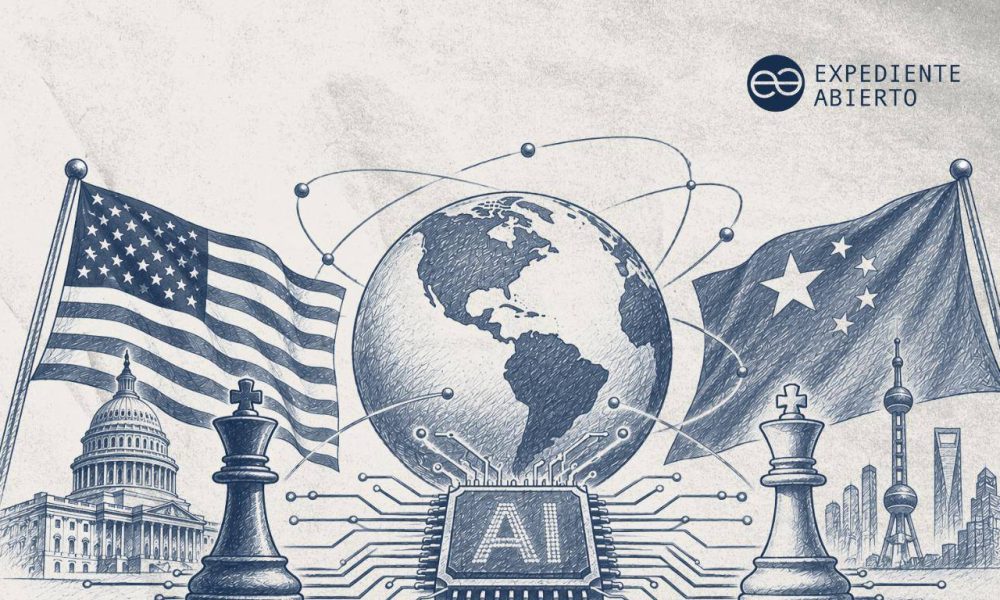
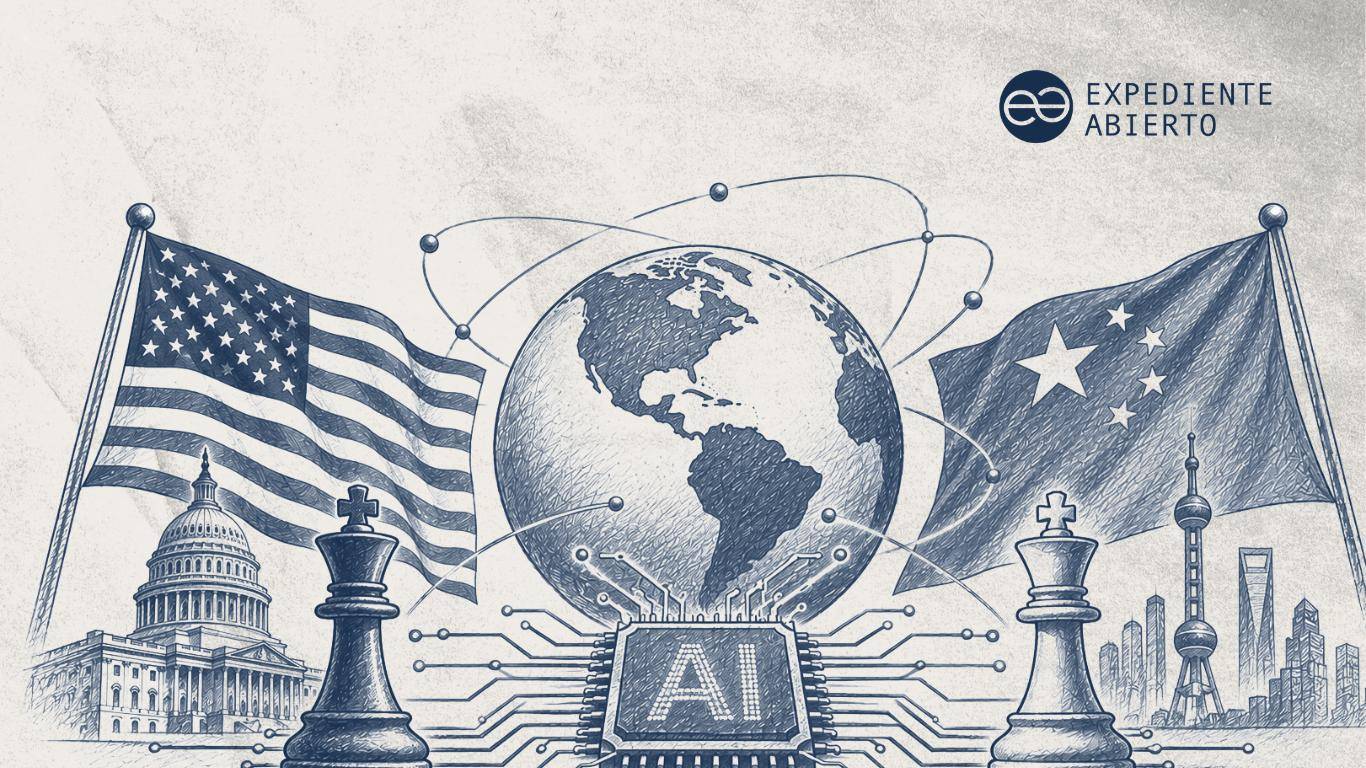
The AI transition could have a destabilizing effect on U.S.-China strategic competition, particularly in the context of political factors distracting or impairing an effective U.S. government response. As I have written elsewhere, although U.S. frontier AI models and AI-enabled robotics enjoy modest advantages over their Chinese competitors, there is a nontrivial risk that Chinese open-weight models, including the DeepSeek and Kimi families, could outcompete Western models in developing-world markets. These models can function without the most capable chips, are trained in part through “distillation” from U.S. models, and are made available for free. China’s enormous potential user base could further support their adoption at scale.
In a similar fashion, the deliberate PRC strategy of incorporating AI into humanoid robotics at scale in its own internal market could give Chinese companies Unitree and Ubtech cost and production-scale advantages over Western competitors such as Tesla and Boston Dynamics across successive product generations.
In such a world, PRC dominance of global market share in both AI and robotics, locked in by the setting of standards favorable to its companies in international forums, would not only allow it to capture the associated value added and technology leadership, but also position it to dominate the associated competition for military AI, robotics and systems. Under the PRC doctrine of civil-military fusion, China’s industrial base for AI and robotics would potentially allow it to leapfrog the U.S. initially in the quantity and later in the quality of AI-empowered military autonomous entities and systems.
In the context of such competition, U.S. technology leadership in areas such as basic and applied research is arguably undercut by the administration’s ongoing fights with and defunding of major research universities, and associated visa restrictions affecting outstanding international students, as well as policies that encourage them to look to Europe, China or elsewhere for their schooling.
Reinforcing such risks, U.S. visa and other policies which shrink the talent pool for leading-edge U.S.-based technology companies may impair their struggle for leadership with the PRC, as it seeks to exploit its advantages of scale, investment, stolen technology, and government industrial policy to outcompete the U.S. in global AI and robotics markets. The competitive position of those companies may be further eroded by U.S. tariff policies which create costs and other impediments for the supply chains of the new robotics and autonomous systems industry. U.S. competitiveness in these industries, and in AI itself, may be further impaired by disruptions to production and related activities caused by legal disputes and government shutdowns in the coming critical years.
In the same fashion, the U.S. response to the PRC’s large-scale introduction of AI and AI-empowered robots, vehicles, and management systems may be impeded by expensive, attention-consuming wars in the Middle East, and possibly even in Cuba and elsewhere in the Western Hemisphere, as well as struggles between the executive and legislative branches over the impeachment of military and other leaders, the legality of past and ongoing military actions, and a range of other issues.
These struggles notwithstanding, the departure of many experienced military leaders and an emphasis on “lethality” and “warfighting culture” could impair the U.S. military’s ability to make optimal technical decisions about the new technologies. In the same way, its ability to effectively incorporate those capabilities will depend on the understanding of the military as an institution by leaders with extensive experience in senior strategic roles, and the retention of the best of those leaders within the force.
Conclusion
These concerns are not predictions of inevitable outcomes; they identify risks that warrant preparation and mitigation. The use of system dynamics principles regarding stabilizing and destabilizing feedback effects suggests that the U.S. and the world are entering into a period of strategic risk. That risk is not based solely on effects that AI and other phenomena described herein could cause. Interactions among AI, existing economic and political pressures, and strategic competition are amplifying instability, while governments and other institutions are becoming less able to contain it.
It is not too late to take deliberate steps to strengthen capacity for adaptation and stabilization. These steps include public policies for the coordinated supervision of the evolution of AI and planning for its effects; strengthening the capacity for collective action within governments, multilateral institutions, and alliances; strategic actions to mitigate complicating effects from wars and new technologies; collaboration among like-minded democratic allies to avoid PRC dominance of AI and robotics technologies and industries; and choosing military applications of AI and robotics that maximize effectiveness across multiple dimensions, not just lethality.
The alternatives are to prepare for the scenario described here as a realistic possibility or to dismiss it as “fake news” and hope it never materializes.