
Executive Summary
The Trump administration has made the Western Hemisphere and countering the threats emanating from the region a high national security priority. This is reflected in the removal of Venezuelan regime leader Nicolás Maduro in January 2026, the kinetic action against small boats allegedly carrying cocaine of the Pacific and Caribbean coasts, the increasing pressure on the Cuban regime, and new efforts to form regional alliances with leaders aligned with the U.S. administration.
As the Trump administration’s 2025 National Security Strategy outlined, the United States must “deny non-Hemispheric competitors the ability to position forces or other threatening capabilities, or to own or control strategically vital assets, in our Hemisphere … Non-Hemispheric competitors have made major inroads into our Hemisphere, both to disadvantage us economically in the present, and in ways that may harm us strategically in the future” (United States of America, 2025).
But the Ortega-Murillo dictatorship in Nicaragua, allegedly the most unquestionable regime in the Western Hemisphere most closely allied with the strategic adversaries of the United States, appears to have gone relatively unnoticed and remains outside the key framework of strategic discussions.
Nicaragua represents a hemispheric security threat because the Ortega-Murillo regime has converted the country into a platform for Russian, Chinese, Iranian, and hybrid threats and negative influences in Latin America. Evidence indicates that this risk goes beyond diplomacy and ideological alignment. The regime deliberately engages in military cooperation, strategic infrastructure development, disinformation networks, technological surveillance, mining sector expansion, illicit-finance risks, irregular migration, and transnational repression to strengthen its power while challenging U.S. and regional security. The regime harbors known terrorists such as Alessio Cassimirri, convicted of murdering former Italian prime minister Aldo Moro, and leaders of the Colombian Revolutionary Armed Forces (FARC) guerrillas who are part of the dissident groups that remain on the designated terrorism list of the U.S. State Department (Alberto, 2026).
Russia remains the regime’s longest-standing and most deeply embedded security partner. Moscow’s influence is evident through military cooperation, police training, the presence of Russian personnel and vessels, GLONASS satellites, and media coordination between Russian state media and the pro-Ortega communications apparatus. Together, these engagements reflect Russia’s strategy and the regime’s permissive environment, positioning Nicaragua as a platform of Moscow’s security interests in the Western Hemisphere.
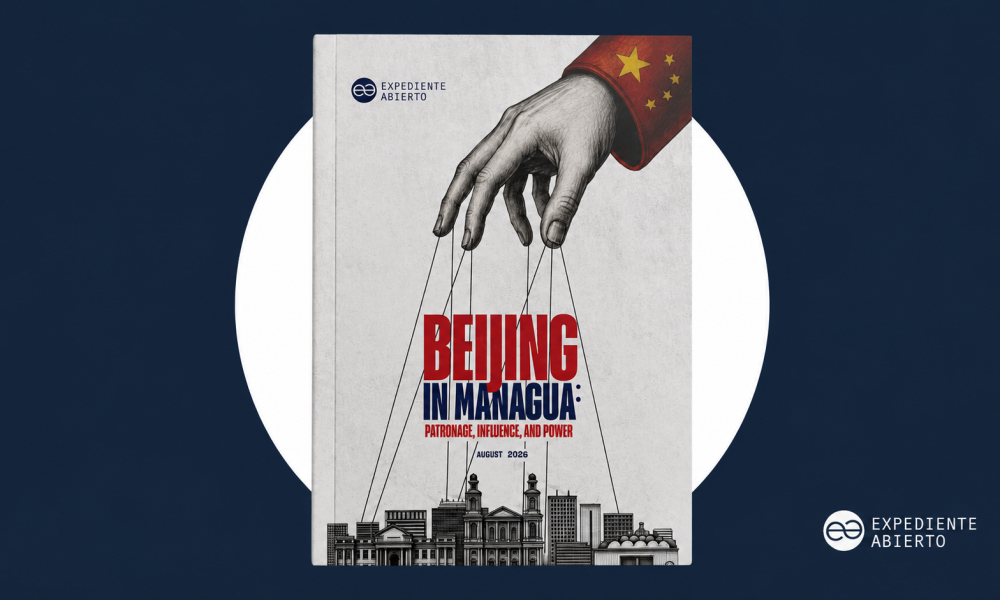
Since 2021, the Ortega-Murillo regime has allowed China to expand rapidly across Nicaragua’s sectors. The relationship ranges from a free trade agreement, the Belt and Road Initiative, major loan and credit commitments, critical infrastructure development with dual-use potential, police exchanges, and mining concessions, particularly in gold. Nicaragua now ranks as China’s primary strategic and ideological ally in Central America, which directly benefits the regime with financing, technological modernization, and diplomatic support.
Iran’s presence remains to a lesser extent than Russia’s and China’s. However, Daniel Ortega and Rosario Murillo provide Tehran with Nicaragua being one of Iran’s most reliable partners in the Western Hemisphere due to diplomatic support and institutional access. In addition, the convergence of bilateral initiatives across diverse sectors also creates channels that may be utilized during heightened periods of U.S.-Iran tensions.
Between 2022 and 2024, Nicaragua demonstrated its ability to exploit U.S. vulnerabilities through migration. Nicaragua was a major transit point for migrants from around the world traveling toward the U.S. southern border. This transit point expanded through air, land, and maritime routes aimed at bypassing the Darien Gap. This route also generated political pressure on the United States while providing another stream of revenue for the Ortega-Murillo regime through visas, transit permits, and salvoconductos.
On July 19, 2026, dictator Daniel Ortega stated that elections would never be held in Nicaragua again, representing the public declaration of a one-party regime like the governance systems of Cuba and China. The United States and Central America must treat Nicaragua as a priority hemispheric security threat, instead of a regional democratic crisis. The United States should continue publicly denouncing the regime’s permissive environment, and continue to closely monitor Russian security cooperation, Chinese economic and infrastructure engagement, the weaponization of Nicaragua’s mining sector, Iranian support during heightened U.S.-Iran tensions, and the regime’s use of migration and hybrid tools to exploit hemispheric vulnerabilities.